2026-09-23 · Rick Malone
How Heavy Spring Rains Affect Sewer Systems Near Accotink Creek
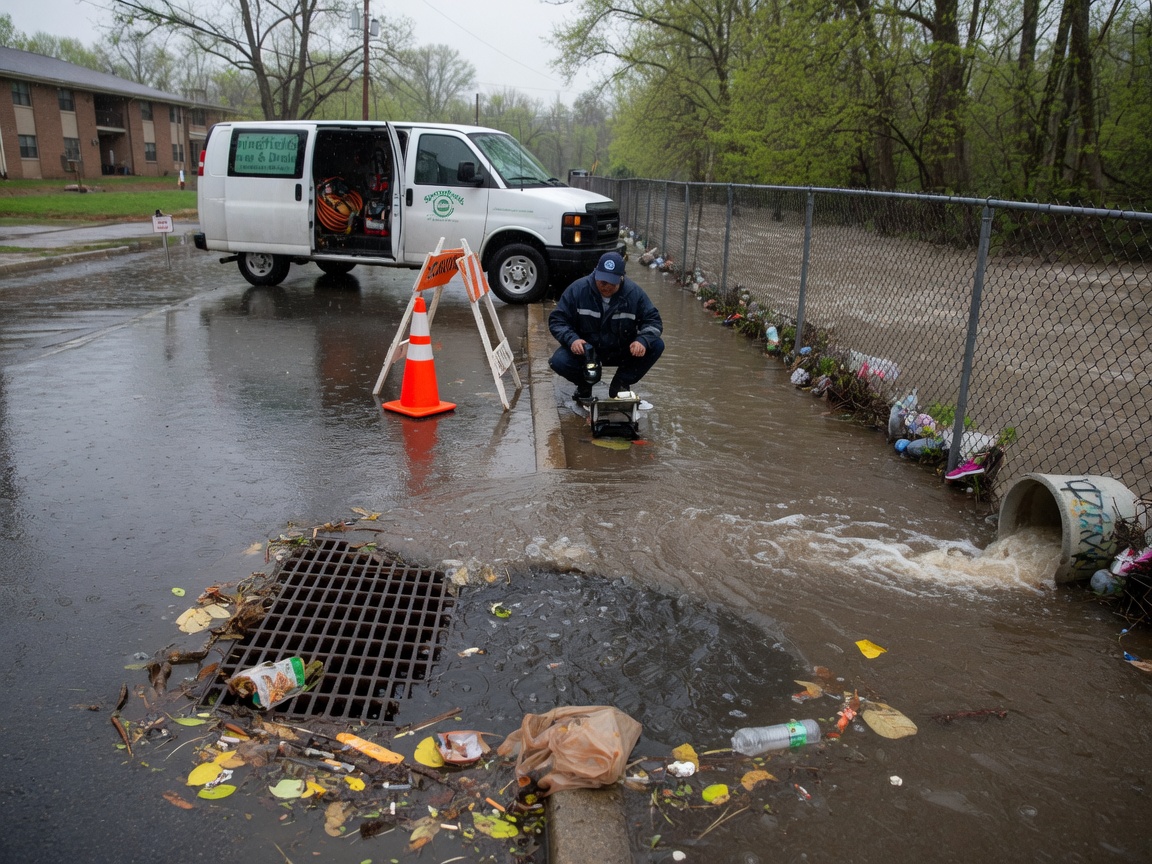
Heavy spring rains near Accotink Creek increase infiltration into sewer lines by saturating clay-heavy soils common around Lake Accotink Park, forcing backups into basements and yards in neighborhoods like West Springfield and Springfield Forest. This occurs because older clay and cast-iron pipes in Fairfax County homes built before 1970 allow groundwater to enter joints when rainfall exceeds typical 2-3 inch events over a few days. The humid subtropical climate delivers these intense spring storms that overwhelm combined systems, sending flow rates far above normal dry-weather capacity.
Soil Conditions Around Accotink Creek
Springfield sits on soils that hold water tightly after prolonged rain, especially in low-lying zones near the creek and Lake Accotink Park. When heavy spring storms hit, this saturation raises the water table and pushes groundwater through cracks in sewer laterals serving homes in Downtown Springfield and North Springfield. The result shows up as slow drains or gurgling toilets days after the rain stops. Homes near Springfield Plaza often see the first signs because their lines run through compacted fill that directs runoff straight toward pipe joints. In contrast, properties on higher ground in West Springfield experience less immediate impact but still face eventual overload once the creek swells and back-pressure builds.
Pipe Age and Material Challenges
Many sewer lines in Springfield date to the 1950s and 1960s, using clay pipe sections that shift with repeated wet-dry cycles common in Fairfax County. Heavy spring rains exploit these joints and allow roots from mature trees along Accotink Creek to enter faster once soil loosens. Cast-iron sections farther from the creek corrode internally and lose capacity, so even moderate extra flow from rain events triggers backups into lower levels. Residents in Springfield Forest and adjacent areas of Alexandria frequently discover offset joints during post-storm camera work because decades of soil movement have already stressed the lines. These material realities turn routine rainfall into repeated service calls each March through May.
Flow Patterns After Spring Storms
Rainfall that once soaked into yards now runs off paved surfaces around Springfield Town Center and into storm drains that share space with older sanitary lines in some sections. This extra volume travels downstream toward Accotink Creek, creating surcharges that back up into laterals serving North Springfield and nearby Fairfax homes. The effect lasts longer than the storm itself because saturated ground continues feeding water into pipes for 48-72 hours. Properties with cleanouts located in low spots see the clearest evidence when lids lift or water appears around them after a downpour.
What Homeowners Can Check
After heavy spring rain, inspect cleanouts near the foundation and note any standing water or odors that persist beyond 24 hours. Homes in Cardinal Forest and Keene Mill Oaks benefit from checking vent stacks for gurgling that signals downstream restriction caused by creek-level backups. Documenting the timing relative to rainfall helps distinguish rain-driven infiltration from other blockages. Sewer Camera Inspection reveals joint separation or root entry that rain exploits. Signs Your Springfield Home Has A Sewer Backup outlines additional indicators specific to Fairfax County properties. For recurring issues after storms, What Springfield Residents Should Know About Sewer Line Costs details factors that influence repair scope in this terrain.